Plants mistaken for Japanese knotweed
At SE Knotweed, we help you rule out the plants most often mistaken for Japanese knotweed, including bindweed, Russian vine, houttuynia, bamboo, dogwood and broadleaf dock. Where the plant is a different invasive species, our sister site Weed Warden covers it.
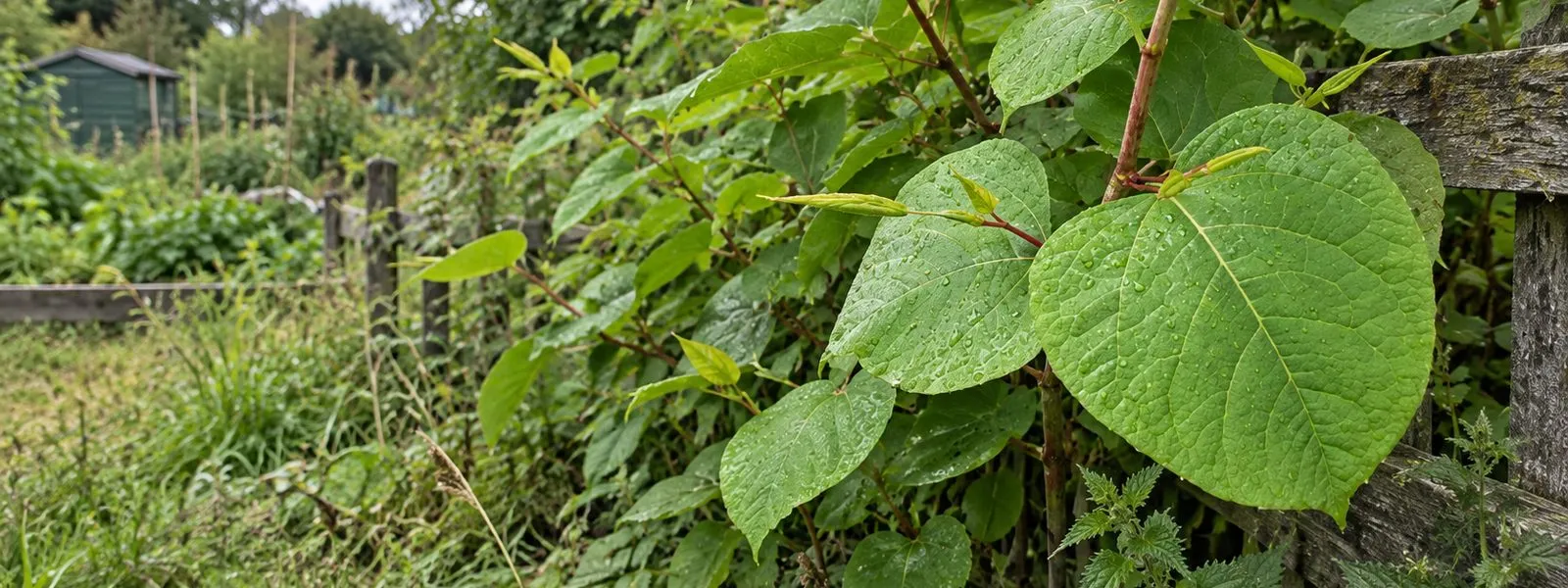
Which plants are mistaken for Japanese knotweed?
The plants we are most often asked about are bindweed, Russian vine, houttuynia, bamboo, dogwood, lilac, Himalayan honeysuckle and broadleaf dock. Each shares one feature with knotweed, a heart-shaped leaf, a creamy flower or a fast-spreading habit, but none has all of the tells together.
The combination to look for is the hollow red-speckled cane, the zig-zag shovel leaf and the late-summer creamy flower spray. If a plant is missing those, it is very likely one of the look-alikes below, and you can stop worrying.
How do I tell knotweed from bindweed and Russian vine?
Bindweed is a climber that twines around other plants and fences with arrow-shaped leaves and trumpet flowers, so its climbing habit alone rules out knotweed, which stands as a self-supporting cane. Russian vine, sometimes called mile-a-minute, also climbs and carries similar creamy flower sprays, which is the closest confusion.
The tell is the stem: knotweed is an upright hollow cane, while Russian vine is a woody, twining climber. Neither behaves like the bamboo-like clump knotweed forms.
What about bamboo, dogwood and dock?
Bamboo has round, woody, unspeckled canes and long narrow leaves, quite unlike the flat shovel leaf of knotweed, though it spreads aggressively by rhizome and worries people for that reason. Dogwood is a shrub with oval leaves and red winter stems, and broadleaf dock has large leaves from a basal rosette rather than a zig-zag cane.
Young knotweed leaves can resemble dock or lilac, so where a stand is small and early, a photograph or a survey is the safe way to be sure.
What if it is a different invasive plant?
If the plant turns out not to be knotweed but is still an invasive species, it is covered by our sister site rather than here. Weed Warden handles giant hogweed, Himalayan balsam, running bamboo and horsetail, among others.
We keep this site to Japanese knotweed so each plant has one clear home. If you are not sure which you have, send us a photo and we will point you the right way.
For other invasive weeds such as giant hogweed, Himalayan balsam, running bamboo and horsetail, our sister site Weed Warden covers identification and control. Visit Weed Warden.
Common questions
- Is bamboo the same as knotweed?
- No. Bamboo has round, woody, non-speckled canes and narrow strap-like leaves, and it spreads by rhizome much like knotweed but is a different plant. Weed Warden covers running bamboo.
- I have a climbing plant with white flowers. Is it knotweed?
- Probably not. Knotweed does not climb. Russian vine and bindweed both climb and twine, and Russian vine in particular has similar creamy flowers, which is the common confusion.
Related guides
Book a survey and get a costed plan
Tell us the address and what a surveyor flagged. We confirm the plant, record the RICS category and set out the figures.