Japanese knotweed removal, survey and a lender-accepted guarantee
At SE Knotweed, we remove Japanese knotweed by treating or excavating the stand and its underground rhizome, ending in a written management plan and an insurance-backed guarantee a mortgage lender accepts. That guarantee is usually what lets a stalled sale move again.
Japanese knotweed removal typically costs between roughly £2,200 and £7,000 for a domestic garden, and we confirm the figure at survey once the stand is measured and the method is agreed.
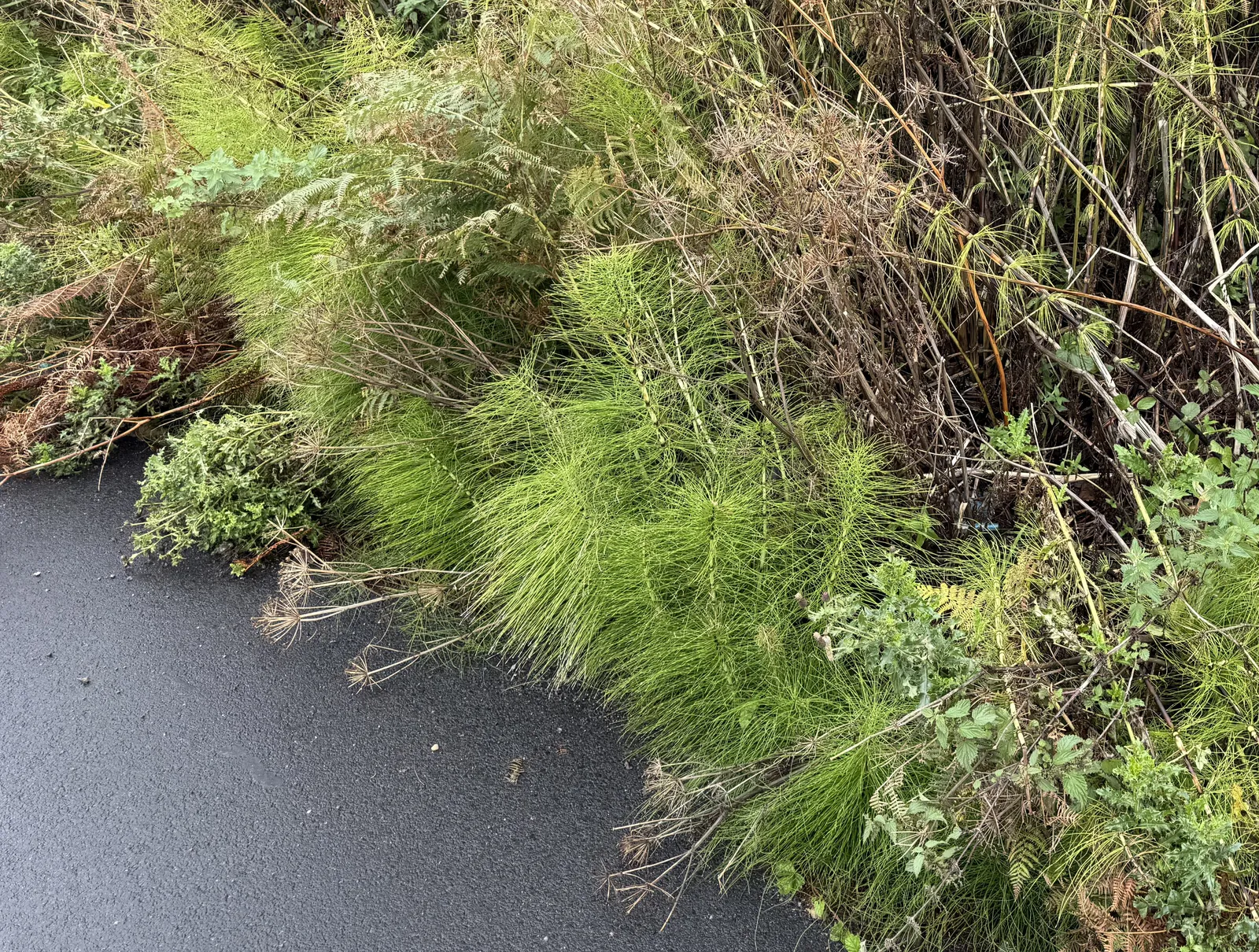
What is Japanese knotweed removal?
Japanese knotweed removal is the controlled treatment or physical excavation of a knotweed stand and its underground rhizome, carried out to a method statement so the plant does not regrow. We start by confirming the species and mapping the stand, then agree the method that fits the site and your timescale.
Removal is documented from survey to sign-off, and you can book a survey to begin.
Do I need to remove it, or can I leave it?
You are not obliged to remove Japanese knotweed from your own land, because having it is not an offence. It becomes a problem when it affects a sale, a mortgage, a boundary or a neighbour, and an untreated stand can hold up a transaction while a valuer flags the risk.
Leaving it also lets the rhizome spread, so for most owners mid-sale the practical answer is to get it surveyed and planned. We also handle the lender side of a stalled sale.
How do you get rid of Japanese knotweed?
You get rid of Japanese knotweed by killing or removing the rhizome, since cutting the visible canes alone does nothing lasting. The three method families are herbicide treatment over several seasons, full excavation and licensed disposal, and on-site burial or a root-barrier membrane where digging out is not practical.
The right one depends on the site, the timescale and whether soil can stay on the plot, and we set the options out in the schedule below.
Which treatment method is right for me?
The method that suits you depends on how fast you need the site clear, whether contaminated soil can remain on the plot, and your budget. Herbicide treatment is the lowest cost and the slowest, and excavation is the fastest and the most expensive.
The schedule sets the families side by side so you can see the trade you are making before the survey. Our treatment methods hub explains each in full.
| Method | Speed | Relative cost | Best for | Soil / waste | Guarantee |
|---|---|---|---|---|---|
| Herbicide treatment | 3 to 5 seasons | Lowest | No sale deadline, soil can stay in place | Minimal | Insurance-backed |
| Excavation and disposal | A few days | Highest | Fast clearance and development plots | Soil removed under licence | Insurance-backed |
| On-site relocation (cell burial) | 1 to 2 weeks | Medium to high | Larger sites keeping soil on the plot | Buried on site to a cell | Insurance-backed |
| Root-barrier membrane | Days | Medium | Containing spread at a boundary | Minimal | Situational |
| Combination treatment | Varies | Medium | Mixed or access-restricted sites | Varies | Insurance-backed |
How much does removal cost?
Japanese knotweed removal typically costs between roughly £2,200 and £7,000 for a domestic garden. Herbicide programmes sit at the lower end and full excavation with licensed disposal at the higher end, driven by the size of the stand, machinery access and the volume of soil classed as controlled waste.
We give a fixed figure at survey rather than a headline number, and the cost pillar breaks it down by method and size.
How long does treatment take?
Timescale depends entirely on the method. Excavation can clear a stand in a few days, while a herbicide programme runs across 3 to 5 growing seasons with monitoring to confirm the rhizome is dead.
Where a sale is in progress, the survey and the costed plan can usually be produced within a week or two, and that plan is often enough for a lender well before the treatment itself finishes.
Will it affect my mortgage or sale?
Japanese knotweed can hold up a mortgage because a valuer flags it as a risk, but it rarely stops one outright. Most lenders proceed where there is a professional management plan and an insurance-backed guarantee that would fund further treatment if the plant returned.
Arranging a survey and a costed plan is the step that reassures the lender and moves the transaction forward.
Is it my responsibility if it came from next door?
Responsibility for knotweed encroaching from adjoining land is a question of private nuisance, and it is more measured than the headlines suggest. In Davies v Bridgend [2024] UKSC 15 the Supreme Court confirmed that a residual fall in value is not recoverable where the spread happened before the neighbour was in breach of any duty.
A survey records the source and extent, which is the evidence a solicitor needs, and our law pillar sets out the position.
What happens after treatment?
After treatment the site enters a monitoring period, and this is where the guarantee matters. An insurance-backed guarantee from an audited contractor commits to returning and re-treating at no further cost if regrowth appears within the term, and it is the document a lender relies on.
We hand over the management plan, the waste transfer note where soil was removed, and the guarantee certificate.
How do I identify Japanese knotweed?
Japanese knotweed is identified by its zig-zag green stems flecked with purple, its shovel-shaped leaves in a staggered pattern, and its creamy flower sprays in late summer. Several garden plants are mistaken for it, so a confirmed identification settles the question before any money is spent on treatment.
Our identification guide shows the seasonal signs, and you can send us a photograph to check.
RICS management categories A to D
The RICS Professional Standard 2022 grades a case from Category A to Category D by the risk to the property and its neighbours. The surveyor records the category for your site.
INSURANCE-BACKED GUARANTEE
The guarantee a lender accepts
An insurance-backed guarantee from an audited contractor commits to returning and re-treating at no further cost if regrowth appears within the term. It is the document that reassures a mortgage lender, because it moves the future risk off the property. The term is confirmed with your plan.
In this section
Common questions
- Can I get a mortgage on a house with Japanese knotweed?
- Usually yes. Most lenders will lend where there is a professional treatment plan and an insurance-backed guarantee in place, even though the treatment itself continues after completion.
- Is it illegal to have Japanese knotweed in my garden?
- No. Having it is not an offence. Causing it to spread into the wild is an offence under the Wildlife and Countryside Act 1981, and contaminated soil is controlled waste.
- Can I remove Japanese knotweed myself?
- You can treat a small stand with care, but the rhizome is hard to kill and any soil you dig out is controlled waste. For a sale or a lender-accepted guarantee, an accredited specialist is needed.
- Does knotweed damage foundations?
- The RICS 2022 standard states that sound, modern foundations are unlikely to suffer structural damage. Knotweed exploits existing gaps and drains rather than breaking sound concrete.
Book a survey and get a costed plan
Tell us the address and what a surveyor flagged. We confirm the plant, record the RICS category and set out the figures.